

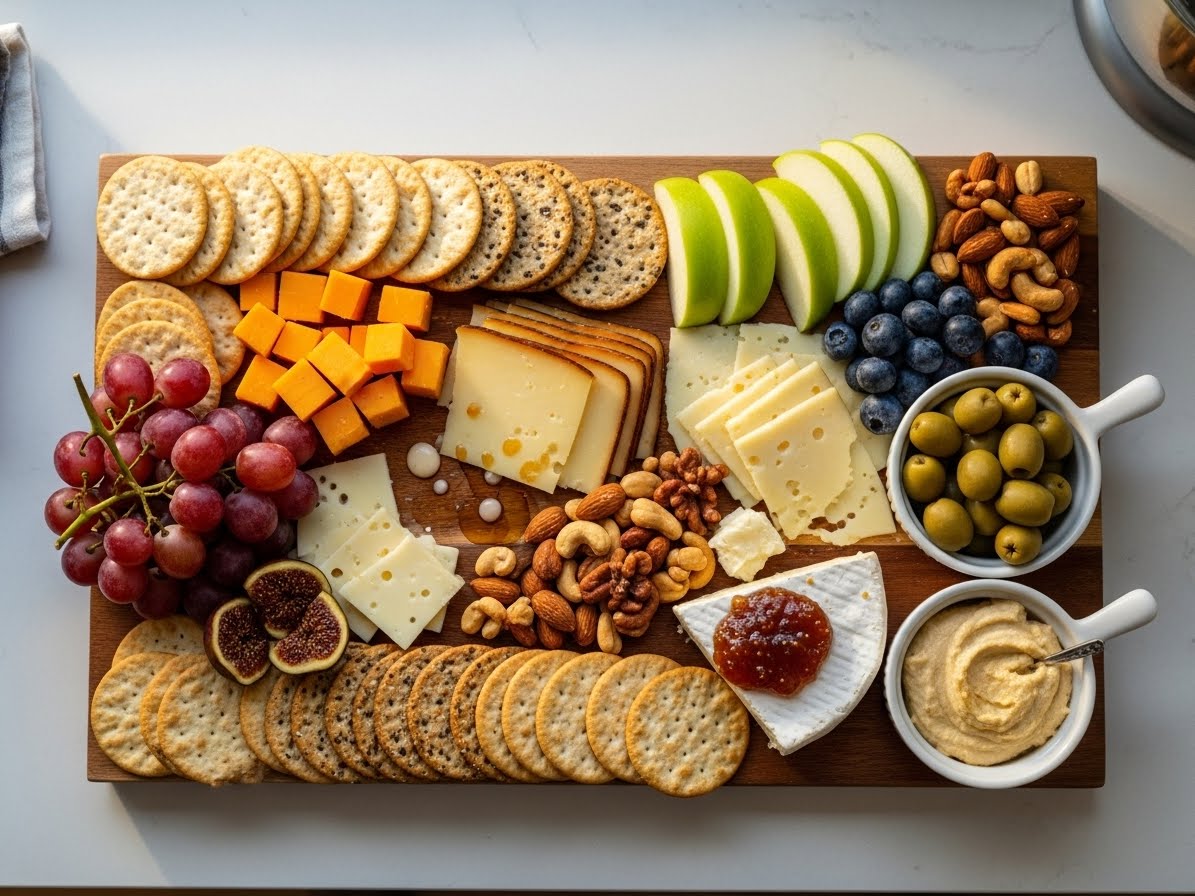
Some nights, cooking feels like a personal attack. You’re tired, everyone’s hungry, and the idea of turning on the stove makes you want to cry into your refrigerator. Been there, done that, got the takeout menu.
That’s exactly why easy snack boards became my secret weapon for busy nights when dinner needs to happen now.
No cooking. No complicated recipes. No judgment. Just grab, arrange, and eat. Honestly, snack boards save sanity—and once you start using them, you’ll wonder why you ever stressed over weeknight meals in the first place.
Let’s talk about how to make them work for real life, not Pinterest-perfect fantasy kitchens where everyone has matching serving bowls and unlimited counter space.
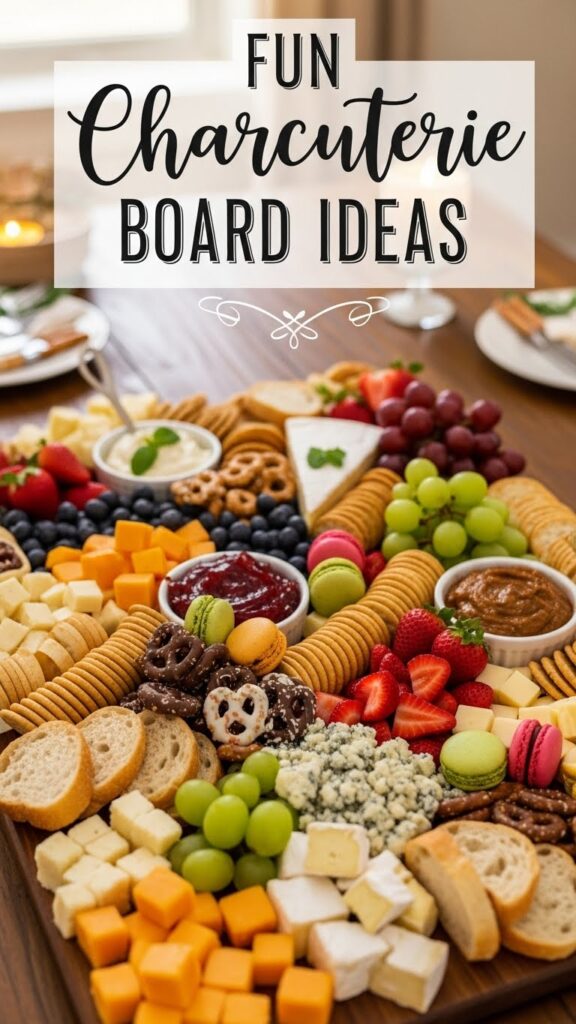
Why Snack Boards Work So Well on Busy Nights
Snack boards hit that sweet spot between “I need food fast” and “I still want this to look decent.” They also let everyone eat what they like without the dinner table negotiations. Total win-win.
Here’s why they genuinely work:
Zero cooking required. Your stove gets the night off.
Everyone grabs what they want. No more “I don’t like that” complaints.
Cleanup stays minimal. One board, a few bowls, done.
You use what’s already in your fridge. No emergency grocery runs.
Ever notice how kids complain less when food looks fun? Same ingredients, different layout, suddenly it’s a hit. Funny how that works.
What Makes a Snack Board Different from a Charcuterie Board?
Let’s clear this up because people love to overthink the distinction.
Charcuterie boards usually feel fancy—like something you’d serve at a wine tasting or baby shower. Snack boards feel practical. They don’t care if the cheese matches the crackers or if everything’s arranged at perfect angles. They just care about solving hunger.
Snack boards are:
- More casual and forgiving
- Budget-friendly (no $18 truffle cheese required)
- Faster to assemble
- Perfect for weeknights and regular life
If you want a deeper breakdown of building boards with intention, my guide on how to build a charcuterie board with easy tips for busy moms walks through the same principles—just with way less pressure and prettier photos.
The Base Rule: Start With What You Already Have
Before buying anything new, pause. Open your fridge. Peek in the pantry. Check that snack drawer you forgot about. You probably already have enough for a solid snack board hiding in there.
I always start with three simple categories:
- Crunchy (crackers, pretzels, chips)
- Protein (cheese, deli meat, nuts, hummus)
- Something sweet (fruit, chocolate, cookies)
That’s it. No complicated formulas. No rules beyond feeding people food they’ll actually eat.
Easy Snack Board Ingredients That Always Work
You don’t need fancy items here. Simple, familiar foods do the heavy lifting.
Crunchy Options:
- Crackers (any kind—I’m not picky)
- Pretzels or pretzel thins
- Popcorn (plain or flavored)
- Pita chips or tortilla chips
Protein Picks:
- Cheese slices, cubes, or string cheese
- Deli meats rolled or folded
- Hard-boiled eggs (pre-peeled if you’re smart)
- Hummus, peanut butter, or almond butter
Sweet Extras:
- Grapes, apple slices, or berries
- Dried fruit like apricots or cranberries
- Cookies, graham crackers, or chocolate squares
- Yogurt-covered pretzels or raisins
FYI—repeating ingredients across boards throughout the week saves time and money. Nobody cares if they saw the same crackers yesterday. They’re hungry, not critiquing your menu planning.
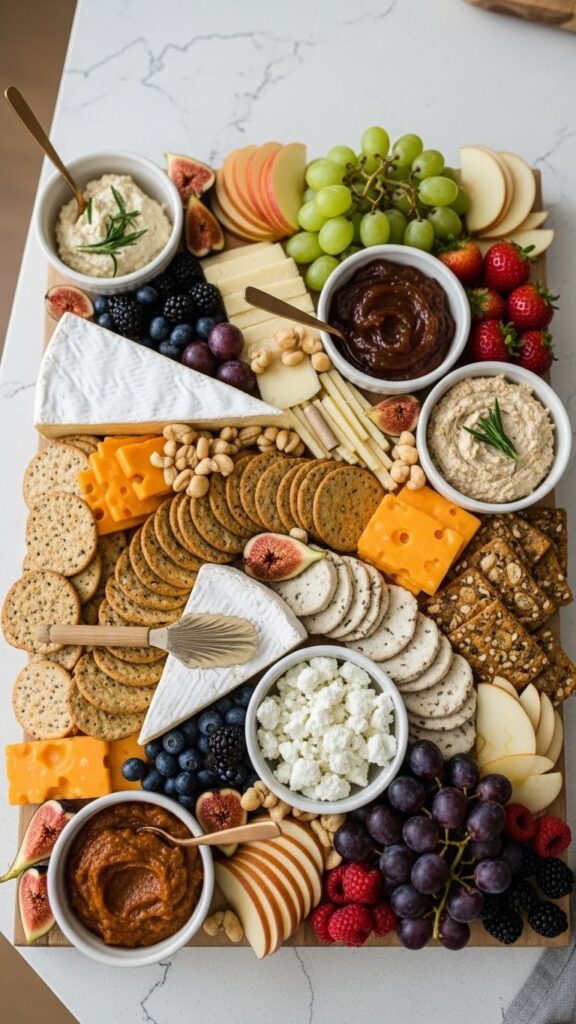
How to Arrange a Snack Board Without Overthinking It
This is where people freeze up and start stress-Googling “how to arrange cheese perfectly.” Don’t do that to yourself.
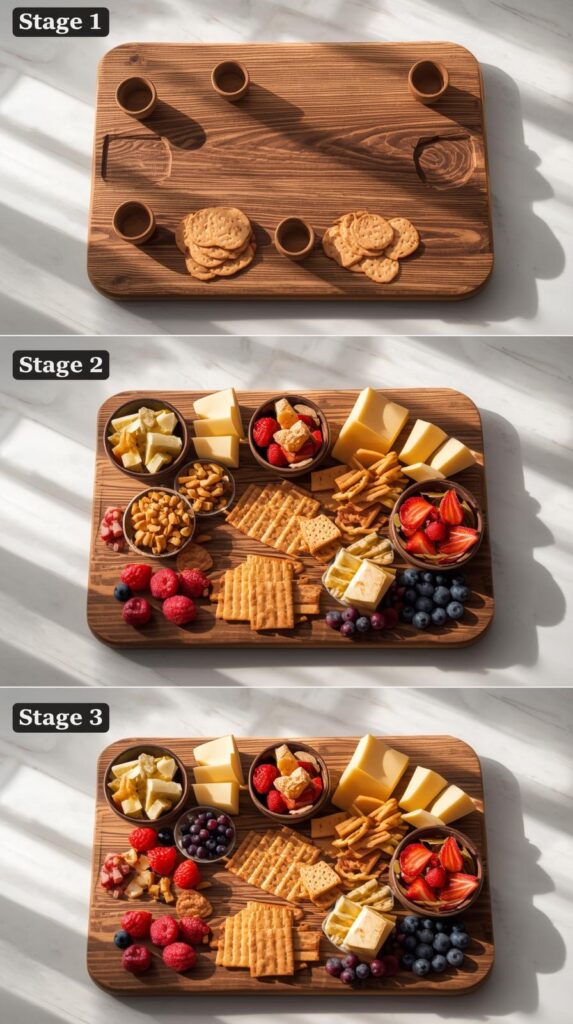
I start with the biggest items first, then fill in the gaps with smaller snacks. That’s genuinely it. You’re not styling a magazine shoot—you’re feeding people who are about to get hangry.
Simple layout flow:
- Place bowls first for things like hummus, dips, or small items
- Add larger items like crackers, cheese blocks, or rolled deli meat
- Fill empty spaces with small snacks, fruit, or treats
If you want help scaling this idea up for guests or parties, my post on charcuterie board setup for a crowd walks through the same process for larger boards without the stress.
Snack Boards for Kids, Teens, and Adults (Yes, One Board Can Do All)
One of my favorite things about snack boards? Everyone eats from the same board, but nobody has to eat the same thing. It’s like a choose-your-own-adventure meal.
For younger kids:
- Cubed cheese (less intimidating than slices)
- Familiar crackers
- Fruit slices they recognize
- Small treats as a reward for trying new things
For teens:
- Bigger portions (they eat everything)
- Protein-heavy options
- Chips and dip
- Sweet snacks they can demolish
For adults:
- Spreads like hummus or fancy mustard
- Nuts and olives
- Bold cheeses (if you’re feeling adventurous)
- Savory snacks and dark chocolate
I just group similar items together so everyone finds their zone without digging through the whole board. Easy crowd-pleasing with minimal effort.
This idea pairs perfectly with these easy charcuterie board ideas for beginners because both focus on simplicity over perfection and feeding people over impressing them.
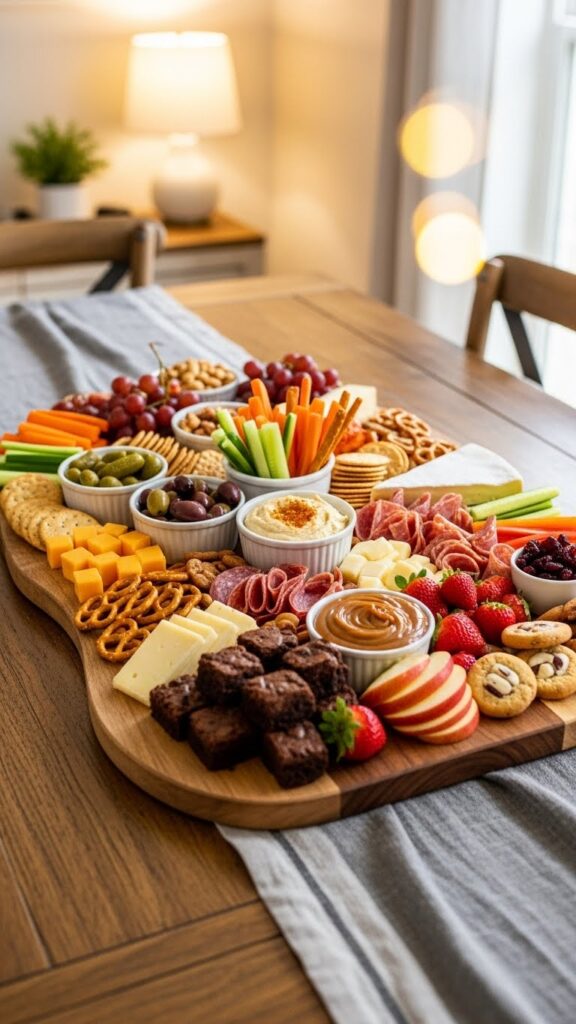
Busy Night Snack Board Ideas You Can Repeat Weekly
You don’t need endless variety or a new theme every night. Rotations work perfectly fine—I promise nobody’s keeping score.
Go-To Board Themes:
Breakfast-for-Dinner Board: Yogurt, fresh fruit, granola, mini muffins, and maybe some bacon if you’re feeling fancy
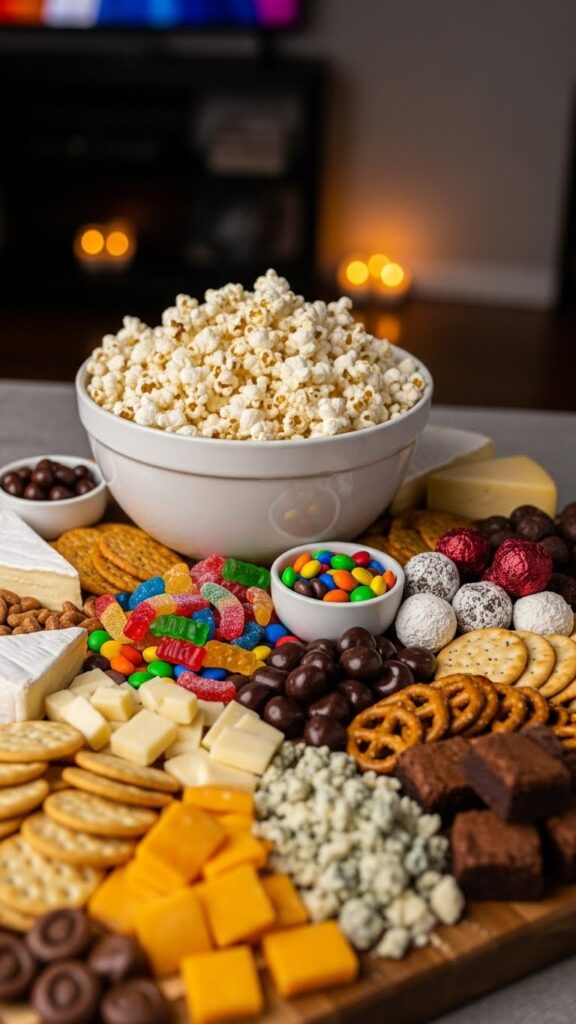
Movie Night Board: Popcorn, candy, crackers, cheese cubes, and whatever snacks are calling your name
After-Practice Board: Protein-packed snacks, fruit, carbs for energy, and plenty of water bottles nearby
Clean-Out-the-Fridge Board: Leftovers become intentional when you arrange them nicely—it’s basically meal planning in reverse
Ever noticed how leftovers feel better when they’re arranged on a board instead of eaten straight from the container? Psychological magic at work.
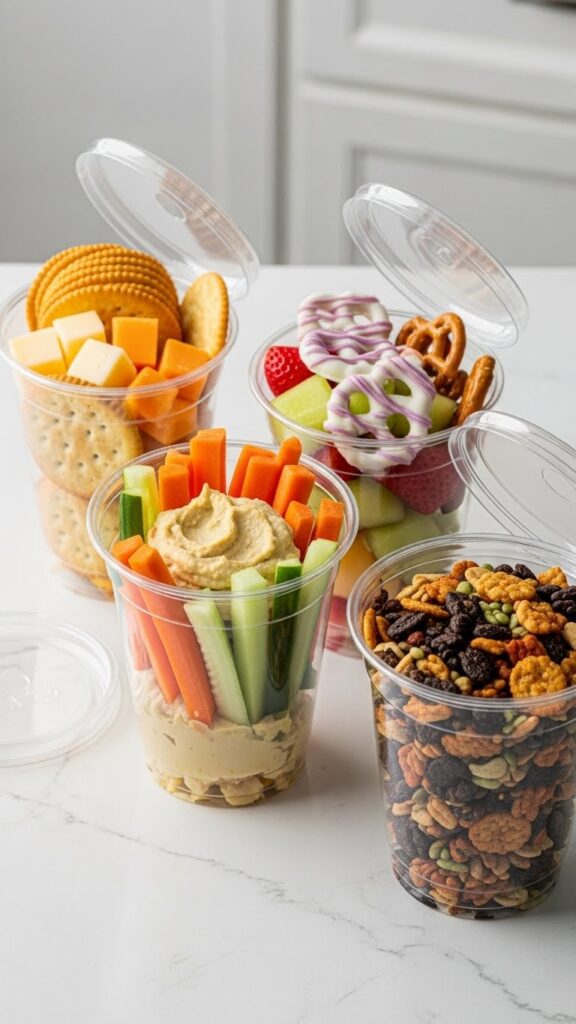
When to Use Cups Instead of Boards
Some nights need grab-and-go solutions, especially if everyone’s eating at different times or heading in different directions. That’s where snack cups shine.
Snack cups:
- Reduce mess (everyone gets their own container)
- Feel fun and personal
- Work great for kids who like “their” food
- Travel well to sports practice or homework zones
This connects directly with how to make charcuterie cups for easy party snacks, and yes—they work just as well for busy weeknights as they do for parties. Same concept, different vibe.
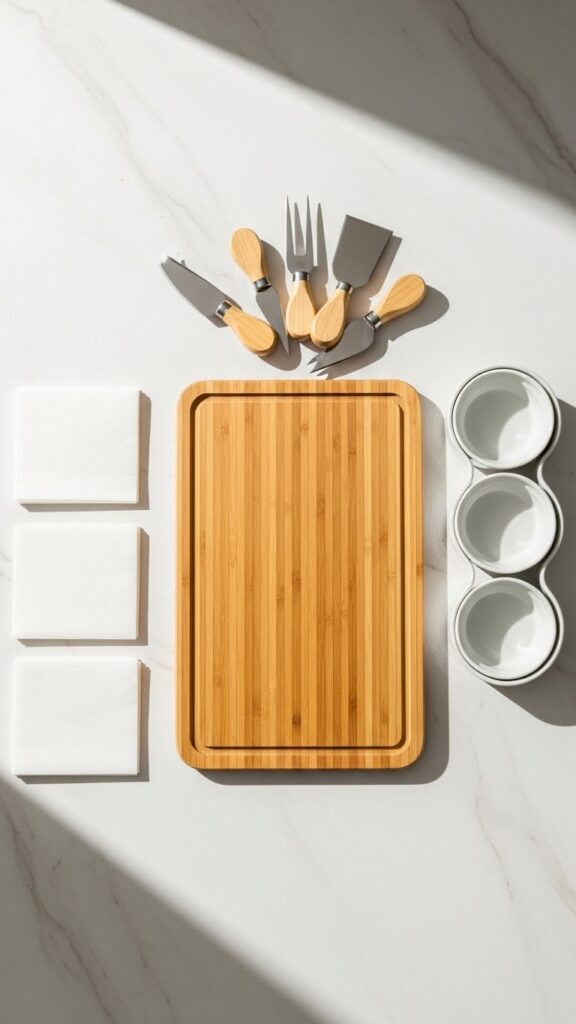
Tools That Make Snack Boards Easier (But Aren’t Required)
You don’t need anything special to make this work, but a few basics definitely help streamline the process. I’ve tested plenty of options, and these are the ones I actually reach for on busy nights.
My Go-To Snack Board Essentials:
Large Bamboo Serving Board – I’ve used this same 15×20″ board for two years now, and it’s perfect for family snack boards. Big enough for variety, but not so huge it takes over the counter. The bamboo holds up well and looks nicer than plastic trays.
Set of 6 Small Ceramic Bowls – These little 4-ounce bowls are workhorses for dips, olives, nuts, or anything that might roll off the board. Dishwasher-safe, which matters when you’re too tired to hand-wash.
3-Piece Cheese Knife Set – Nothing fancy, just a spreader, a hard cheese knife, and a soft cheese knife. Makes serving easier and honestly makes the board look more intentional with minimal effort.
Pre-Cut Parchment Paper Sheets – This is my secret weapon for cleanup. Line your board or tray with parchment, arrange everything on top, then just toss the paper when you’re done. Game-changer for lazy nights (which is most nights).
Stackable Bamboo Storage Boxes – Not essential, but if you’re doing snack boards regularly, these keep crackers, nuts, and dried fruit fresh and organized. Makes assembly even faster when everything’s in one spot.
Honestly? You can make snack boards work with whatever you already have—a cutting board, some random bowls, a butter knife. But if you’re doing this weekly (like I do), investing in a few basics makes the whole process smoother and more enjoyable.
Quick Tip:
Start with just the serving board and small bowls. Add other tools only if you find yourself making snack boards regularly enough to justify them.
How Snack Boards Save Time (And Your Sanity)
This is the part nobody talks about enough, but it’s honestly the most important benefit.
Snack boards:
- Remove decision fatigue (no recipe hunting at 6 PM)
- Reduce cooking stress (no burnt pans or timing disasters)
- Cut cleanup time (fewer dishes, less scrubbing)
- Encourage family meals (everyone sits together, even if briefly)
You’re not skipping dinner or being lazy. You’re redefining it in a way that works for your life. Big difference, and honestly? More families should embrace this approach without guilt.
That’s why these boards show up constantly on Pinterest right now—they solve a real, everyday problem that busy families face.
Seasonal Snack Boards Still Work on Busy Nights
Seasonal doesn’t have to mean complicated or time-consuming. It just means using what’s available and tastes good together.
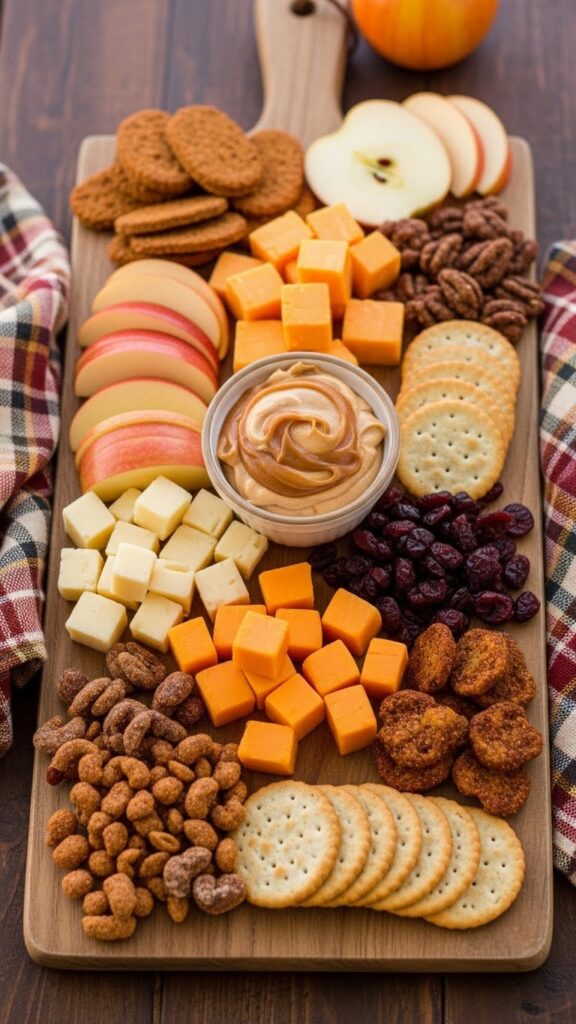
Fall boards? Apples, sharp cheddar, crackers, caramel dip, and maybe some spiced nuts. Done in five minutes.
This pairs nicely with the ultimate fall charcuterie board guide, but scaled down for weeknights instead of holiday events. Same cozy vibes, fraction of the effort.
Winter boards: Citrus, dark chocolate, nuts, and hearty cheeses feel right when it’s cold outside.
Spring/summer boards: Fresh berries, lighter cheeses, veggies with dip, and refreshing fruits make warm-weather eating easy.
How to Make Snack Boards Feel Like a “Real” Meal
If the thought “Is this enough food?” pops into your head, here’s the fix: make it bigger.
Add:
- More protein (extra cheese, deli meat, or hard-boiled eggs)
- More carbs (additional crackers, bread, or pita)
- Larger portions overall (don’t be shy about quantities)
That’s it. Snack boards only fail when they’re too small for the number of people eating. Err on the side of abundance, and you’ll be fine.
How Often Can You Use Snack Boards?
Honestly? As often as you want without apology.
I rotate them in when:
- We’re short on time (most weeknights, let’s be real)
- Everyone’s tired and cranky
- Groceries are running low before shopping day
- I don’t feel like cooking—and that’s completely valid
Nobody complains. Ever. In fact, my kids get excited when they see me pulling out the board because they know it means easy, fun food.
Final Thoughts: Snack Boards Count as Dinner
Let’s normalize this approach once and for all.
Snack boards aren’t lazy parenting or a cop-out dinner solution. They’re practical, they feed people real food, they save time, and they lower stress. That’s a legitimate win in my book, and I refuse to feel guilty about it.
If you already enjoy charcuterie boards for special occasions, think of snack boards as their relaxed cousin who shows up in yoga pants—same general idea, way less effort, totally comfortable being themselves.
Next time a busy night hits, skip the stove and grab a board. Your future self will thank you, and your family will be fed, happy, and none the wiser that you “didn’t really cook dinner.”
Because honestly? This is dinner. And it counts.

